Interdisciplinary Research Generators
Interdisciplinary Research Generators (IRGs) are communities of inquiry that are designed to jumpstart new or expanded research led by teams of faculty, staff researchers, and students. IRGs cultivate research thinking and enable students to complete their scholarly project requirement through course offerings and non-credit-bearing experiential learning. IRGs each have a broad, interdisciplinary theme and welcome students from any major. Faculty/staff members in fields associated with the theme are invited each year to become affiliates. Initial funding of new interdisciplinary research generators is for a three-year period.
As of September 2026, seven new IRGs have been established, further expanding opportunities for interdisciplinary collaboration, scholarly inquiry, and student engagement across a broad range of research themes. Recruiting for these new generators will be happening in late Fall 2026 for Spring 2027 research positions. To receive updates about recruiting callouts, sign up below.
The SPARK Lab will work with individual students who wish to take a leadership role, either for their own personal or professional development, and ensure they have sufficient time and academic schedule to center themselves around a collective project or lab administration. Leaders will be asked to collaborate with their team (even if that is a team of one), provide bi-weekly updates to the PI and chart their short and long-term goals they hope that the program will satisfy. All labor in the SPARK Lab will be aligned as much as possible with each member's strengths, passions and pursuits. The PI benefits only if each member can satisfy their individual interests and intellectual growth. This will not be a factory or assembly line. It will serve exclusively as a generator for each student's scholarly ambitions around learning and AI. All disciplines are welcome and encouraged to apply.
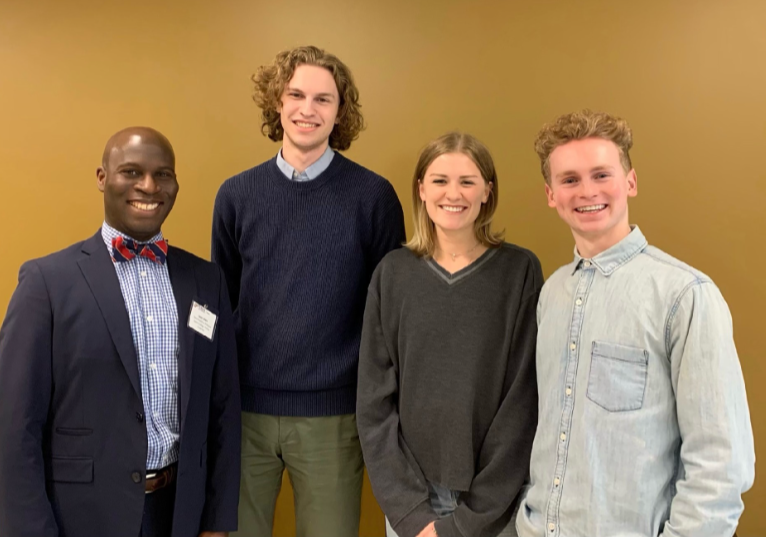
The Transformative Scholarship Research Generator exists to bring local, regional, national, and international students. faculty, industries, and communities together to develop engaged undergraduate scholars equipped to change the world through the co-creation of knowledge and mutually beneficial projects, tools, and resources focused on improving the quality of life.
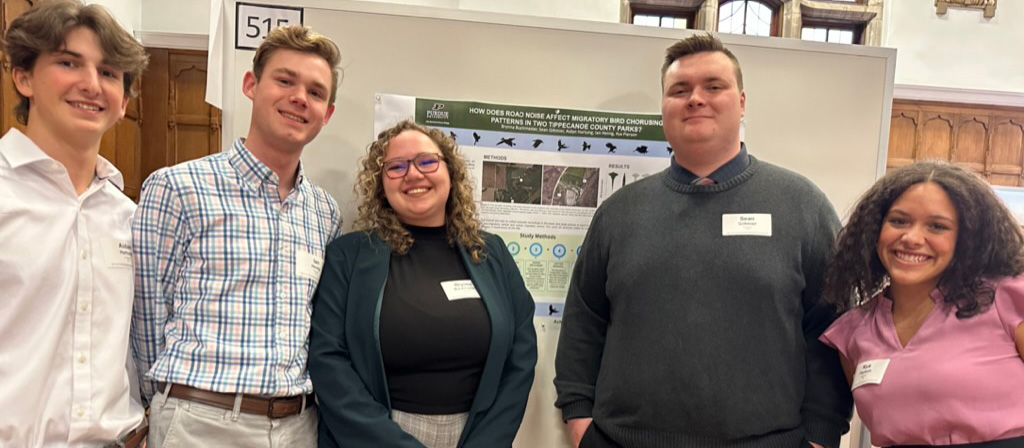
The aim of the HIFI Lab at the John Martinson Honors College (JMHC) at Purdue University is to cultivate a vibrant undergraduate interdisciplinary community of JMHC undergraduate students interested in the science, technology and culture of conservation and sound.
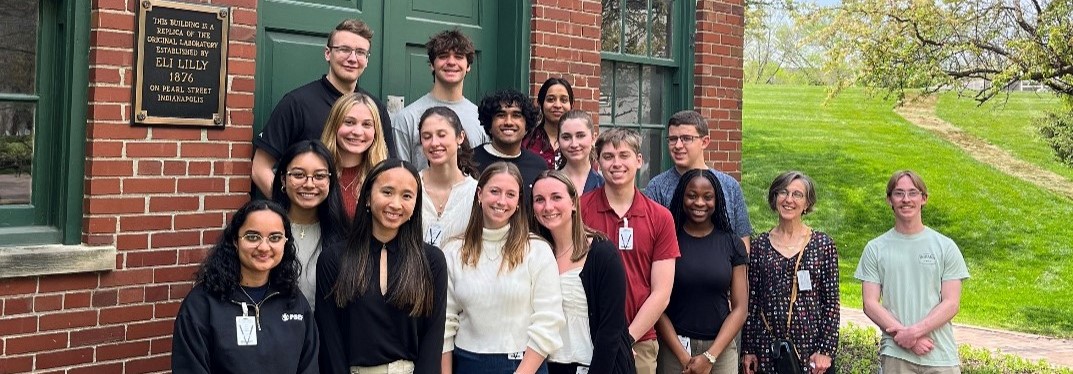
The Interdisciplinary Research Generator (IRG) HEalth Ambassadors with the LPII (LPII stands for Lilly Purdue Innovation Institute) is a community of practice of students, faculty, and staff interested in the pharmaceutical industry challenge of developing effective and affordable therapeutics to tackle the diseases that currently affect large portions of the world population from cancer to Alzheimer, to diabetes, and many more.
The Tech Justice Lab (TJL) is a cross-college collaboration that prioritizes the development of interdisciplinary, justice-oriented undergraduate technology researchers and practitioners. The TJL builds on the Honors College’s mission of fostering well-rounded and highly engaged students, equipped with the interdisciplinary knowledge and skills to impact society for the better. Interested students from any discipline, with guidance from TJL affiliated faculty and peers, will develop their toolkits of critical frameworks for evaluating the ethics and social impacts of technology.
New Interdisciplinary Research Generators
Co-Directors - Jasmine Begeske and Jennifer E. Smith
Within the Center for Research and Equipment for Assistive Technology in Education (CREATE) will engage JMHC students in research on advancing assistive technology (AT) to identify evidence-based practices and research gaps, design and prototype real-world AT solutions, and develop practitioner resources. Current community-engaged collaborations include enhancing AT embedded science education, expanding access to visual art education through individualized AT for students with extensive needs, and developing effective reading instruction AT solutions. JHMC students will generate breakthrough solutions that expand access and opportunity for individuals with disabilities while completing meaningful scholarly projects.
Director - Bruno Roseguini
Building Human Resilience in a Warming World: Advancing Cardiovascular Health, Physical Performance, and Healthy Aging.
HEART Lab will engage JMHC students annually through representative projects such as:
Heat Therapy to Accelerate Recovery Following Strenuous Exercise - This project investigates whether repeated hot-water immersion accelerates recovery from exercise-induced skeletal muscle damage. Students will evaluate muscle strength, soreness, microvascular oxygenation, muscle morphology, and skeletal muscle bioenergetics using advanced techniques, including near-infrared spectroscopy and magnetic resonance imaging and spectroscopy
Heat Therapy as an Exercise-Mimetic Strategy for Cardiovascular Health - This project examines whether repeated hot-water immersion induces cardiovascular and skeletal muscle adaptations resembling those produced by aerobic exercise. Students will gain experience with human research, cardiac and skeletal muscle imaging, exercise testing, vascular assessment, and molecular analyses.
Heat Therapy to Build Cardiovascular Resilience to Extreme Heat - This project tests whether repeated hot-water immersion can physiologically prepare older adults, particularly those with cardiometabolic multimorbidity, to better tolerate extreme heat. Students will investigate whether heat acclimation reduces cardiovascular, cerebrovascular, and thermoregulatory strain during a simulated heat wave by assessing core temperature, cardiac function, blood pressure regulation, cerebral blood flow, and vascular function.
Mechanisms of Cardiac Resilience Following Repeated Heat Exposure - This project uses preclinical models to determine whether repeated heat exposure strengthens the heart’s ability to respond to physiological stress. Students will assess cardiac structure and function using high frequency ultrasound before and during pharmacological β₁-adrenergic stimulation with dobutamine or isoproterenol.
Director - Andres Tovar
This lab will engage JMHC students annually through representative projects such as:
Agentic Design of Compostable Plastics - Students will develop human-supervised AI agents that help design compostable plastics by synthesizing literature, organizing experimental data, constructing predictive models, and recommending formulations and processing conditions. Research will examine how starch source, plasticizers, fibers, additives, drying, and manufacturing affect mechanical performance, moisture response, processability, and degradation. Students may contribute to agent architecture, materials databases, experiments, surrogate modeling, Bayesian optimization, sustainability metrics, or validation.
Sustainable Biomaterials for Wound Healing - Students will develop bio-based materials for wound dressings, including thermoplastic starch (TPS) aerogel foams and Janus structures that combine a hydrophilic cellulose nanofiber-pectin wound-facing layer with a moisture-resistant TPS-based external layer.
Compostable Filament for Additive Manufacturing - Students will design and manufacture thermoplastic starch filament for fused deposition modeling. Projects may investigate material formulation, extrusion conditions, filament-diameter control, moisture conditioning, printability, interlayer bonding, dimensional accuracy, mechanical properties, and storage stability.
Compostable Films with Tailored Moisture Resistance - Students will develop thermoplastic starch films with tailored hydrophobicity and moisture-transport properties for bags and other sustainable packaging applications. Projects may examine plasticizers, natural waxes, fatty-acid treatments, fibers, coatings, multilayer structures, film thickness, processing conditions, and sealing methods.
Conductive and Adhesive Bioplastics for Bioelectronic Interfaces - Students will develop TPS based composites combining electrical conductivity, adhesion, flexibility, and controlled degradation for flexible electrodes and bioelectronic devices.
Not Recruiting until Spring 2027 - contact Sarah Vaughn with any questions.
Director - Lisa Bosman
The Applied Engineering Research Translation & Impact Group will engage JMHC students in interdisciplinary applied engineering research spanning renewable energy, healthcare technology, embedded systems, AI, and innovation. Students will participate in faculty-mentored projects that move from applied research to research translation to real-world impact, developing skills in research design, data analysis, technology development, communication, and dissemination. Guided by faculty with complementary expertise and strong records of undergraduate research mentorship, students will develop scholarly projects that connect engineering research to practical solutions and societal needs.
Director - Xing Wang
The PetTech Innovation Lab investigates the design, validation, and commercialization of innovative companion animal products through interdisciplinary collaboration among faculty in business, engineering, and veterinary medicine. Honors students will conduct research to identify unmet needs, develop and evaluate product concepts, validate solutions through customer and stakeholder engagement, and assess market and commercialization opportunities within the growing pet industry. Projects may include smart technologies, mobility aids, wellness products, and behavioral support tools. Students will contribute to scholarly research while advancing innovations that improve companion animal health, welfare, and quality of life.
Director - Daniel Schiff
The Forecasting AI Risks and Impacts on the Workplace (FAIRWORK) research lab will examine how AI reshapes work, labor, and policy. Current team members (faculty, postdoc, grad, and undergrad) have already produced a database on AI and work, a book chapter, and two working papers. FAIRWORK will facilitate broader interdisciplinary participation, bringing complementary organizational, policy, economic, and computational perspectives to (initially) four main workstreams below.
Systematic Evidence Synthesis on AI and Work(ers) - FAIRWORK team members will maintain and update an interdisciplinary database of more than 1,000 manually-coded academic papers through systematic literature review and evidence synthesis protocols.
Data Infrastructure, Responsible Semi-Automated Methods, and Public Research Portal - The FAIRWORK team will host the data on a public-facing portal for policymakers, business stakeholders, and the public. The team will develop user-focused web design, translating findings into usable evidence for non-specialists.
Survey and Experimental Research on Responses to AI and Work - Predictions A survey experiment will directly probe three AI stakeholders: policymakers, workers, and business managers. We will answer whether and how scholarly predictions influence these stakeholders’ beliefs, policy preferences, and behaviors toward AI and its regulation.
Computational Text Analysis, Meta-Analysis, and Policy Mapping on AI and Labor - The existing FAIRWORK’s SLR codes qualitative content analysis on high-level categories. However, meta-analysis of quantitative measures of labor impact and latent semantic framing from computational text analysis can provide further actionable insights for stakeholders. Leveraging findings from other workstreams, a meta-analysis and computational text analysis study on a subset of FAIRWORK data will surface findings absent from our current coding.
Director - Davi Cordeiro Moreira
SIGNAL will engage JMHC students annually through representative projects such as:
Voice and Institutional Response - Which issue frames actually get institutions to respond, and does the framing that wins a response also move public trust in the responding institution?
Disclosure Events and Market Response - Does the wording of a corporate disclosure carry information beyond its facts, moving short-window returns and shifting how investors perceive risk?
Health Claims and Consumer Behavior - How do health and wellness marketing claims persuade, and does the language of a claim change perceived credibility and purchase intention when the product facts are held constant? Students examine health and wellness marketing claims documented in U.S. Food and Drug Administration (FDA) warning letters within one preselected product category and period, coding claim types, claimed physiological mechanisms, and evidentiary support.